

AI research spanning various industries
At the core of every business lies the wisdom that artificial intelligence may transform. These are the challenges Vision Elements can help resolve.
Medical device
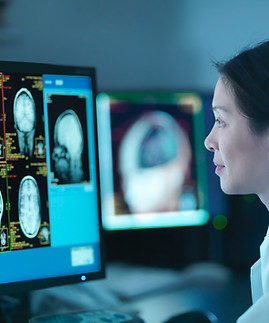
There is a huge variety of imaging modalities for medical applications, and there is great potential in fusing information from different ones. Diagnostics and image-guided therapy often blend, encompassing surgical augmented reality, and gradually transform into robotically-assisted procedures.

Autonomous robots
Deep reinforcement learning methods allow for autonomous machines to adapt to environmental dynamics. The use of LiDAR and multi-sensor arrays brings robots to unprecedented achievements in agricultural technology, self-driven vehicles, and consumer service robots.

Airborne systems
Photogrammetry applications, based on satellite imagery, drone footage, or airplane-mounted cameras, keep our land and real-estate maps up to date. Real-time applications, enabling GPS- and IMU-based geo-referencing on-the-fly, track sport events, leisure activities, and traffic control.
Defense & security
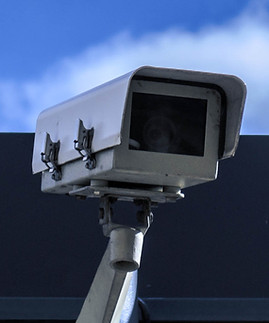
Artificial intelligence applied to computer vision tasks in fields like defense and security are often challenged by difficulties related to data collection. Creative solutions include advanced data simulation, as well as continual learning methods enabling deployed systems to keep improving detection rates over time.

Smart facilities
Multi-camera networks of both active and passive nature are deployed in checkout-free stores, in retirement homes, and around loading docks. They require special architectures as well as edge computing capabilities to balance the load across the network and produce high responsivity to multiple events in parallel.

Inspection
Industrial inspection starts with the right choice of optics and sensors. Normally, pre-trained neural networks are adapted through transfer learning to the specific requirements related to object counting or anomaly detection.
One-stop-shop
for any AI journey
While some systems require a pre-trained neural network deployed on an edge device, others need continual learning to constantly improve. Data collection – synthetic and real, semi-automatic labelling, model development, training, verification and deployment are reiterated to optimum.